AEO metrics in 2026: how to measure citations, grounding queries, and AI visibility
A practical AEO measurement framework built around Bing AI Performance, Google's latest AI Search updates, ChatGPT shopping research, and citation-quality audits.
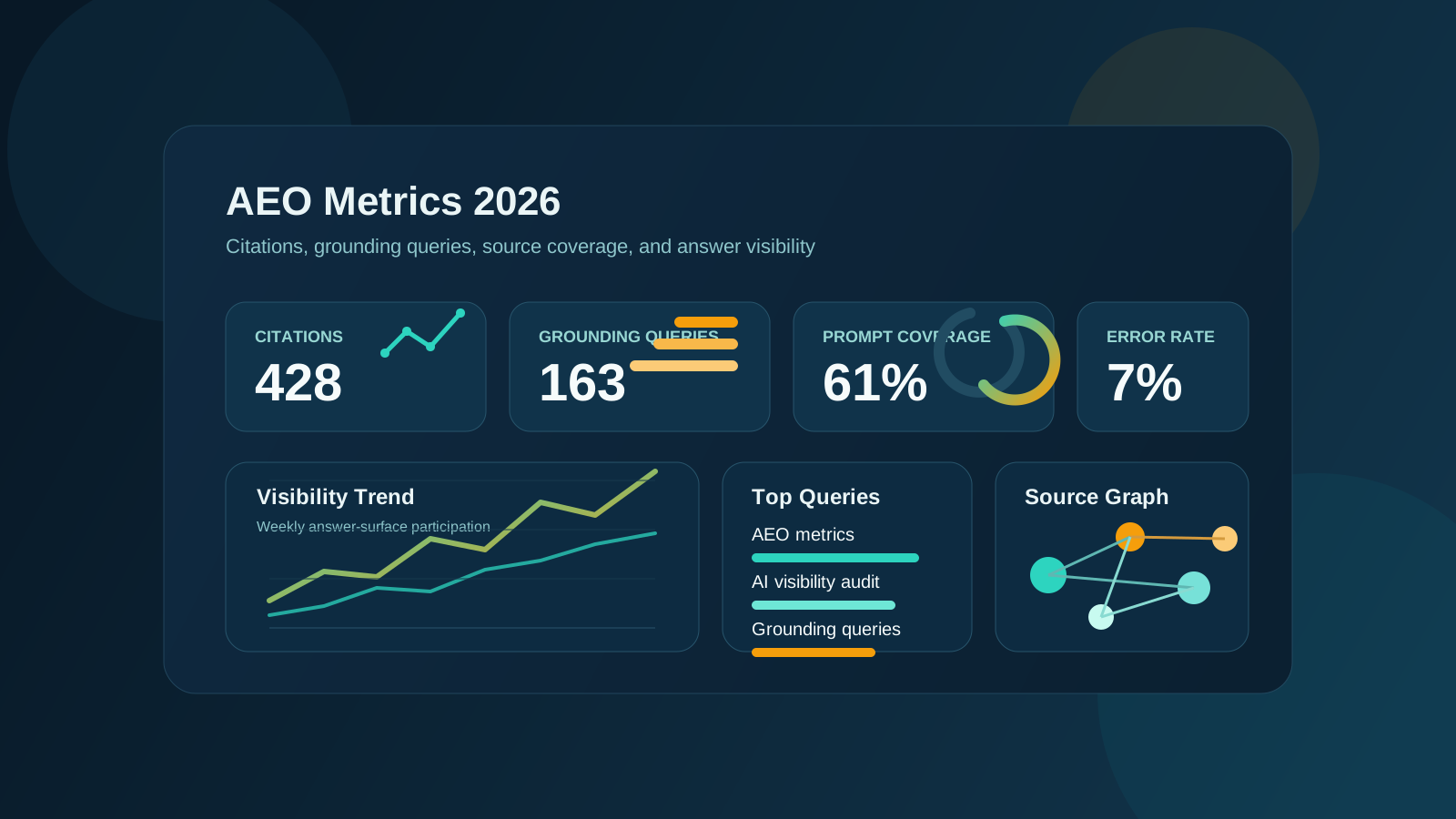
AEO measurement changed materially in 2026. It is no longer enough to say that AI visibility is hard to track and stop there. The major answer surfaces are exposing more clues about how they retrieve, cite, and present web content, while researchers are publishing stronger evidence about citation quality, source concentration, and grounding failures. For teams working on answer engine optimization, this changes the job from speculative observation to operational measurement.
That shift matters for SEO too. As more discovery happens inside AI answers, brands need content that can both rank and be reused as evidence. A strong AEO measurement model helps you decide what to publish, which pages deserve updates first, and how to turn informational content into a durable source asset that search engines and answer engines can cite.
Why this topic matters right now
In the last year, Google and Microsoft moved from describing AI search conceptually to releasing clearer product signals for site owners. Google Search Central says the usual SEO fundamentals still apply to AI features, but it also explains that AI Overviews and AI Mode can use query fan-out, issuing multiple related searches across subtopics and sources before composing a response. That means a page can become valuable for a single head query and also as a supporting source inside a wider retrieval chain.
Google has also published fresher adoption and publisher signals. On June 3, 2026, Google said AI Overviews had surpassed 2.5 billion monthly active users and AI Mode had passed 1 billion monthly users. In the same announcement, Google said it was testing new Search Console controls and new AI-search reporting for some UK site owners, including impressions, page appearance data, and country-level information for generative AI search features. Even before those reports roll out globally, the message is clear: answer visibility is becoming measurable at platform level.
Microsoft made that transition even more concrete on February 10, 2026, when Bing Webmaster Tools introduced AI Performance in public preview. For many AEO teams, this is the first native dashboard that translates AI answer visibility into recurring metrics rather than screenshots and anecdotes.
The recent signals that changed the AEO measurement stack
- Bing AI Performance now reports total citations, average cited pages, grounding queries, page-level citation activity, and visibility trends across supported AI experiences.
- Google Search says AI features still rely on foundational SEO, but pages must be indexed and eligible to show a snippet if they are to appear as supporting links in AI Overviews or AI Mode.
- Google has expanded AI Search with more inserted links, source previews, Preferred Sources labels, and tests for Search Console AI controls and AI reporting.
- Google has also reported that AI Overviews and AI Mode are increasing search usage and changing query behavior toward longer, more exploratory, multimodal prompts.
- OpenAI's shopping research shows that answer interfaces are now deeper decision surfaces: they ask clarifying questions, compare tradeoffs, and assemble buyer guides from current web sources.
- Recent audits show why citation quality matters: one May 2026 paper found evidence of AI-generated sources in around 16 percent of cited generative-search sources, while another found unsupported claims in a share of video-grounded generative search outputs.
The AEO metrics that actually matter in 2026
Most teams still over-index on referral traffic. That is too late in the journey and too narrow for answer engines. A better framework measures how often your brand and pages participate in answers before the click, which prompts trigger that visibility, and whether the cited content is trustworthy enough to survive synthesis.
1. Prompt coverage rate
Build a prompt portfolio from real buyer behavior and track the percentage of prompts where your brand appears at all. Separate informational, comparison, problem-solution, local, pricing, alternative, and purchase-intent prompts. Coverage rate is your top-of-funnel AEO KPI because it reveals whether you are even present in the answer set.
2. Recommendation rate
Being cited and being recommended are different outcomes. Track how often your brand is explicitly suggested as a provider, product, source, or next step. This metric matters because some brands appear in background citations without winning buyer attention.
3. Citation rate
Citation rate measures the share of prompts where one of your URLs is referenced as a supporting source. This is where Bing AI Performance is especially useful because it gives native citation counts and page-level activity. Citation rate is one of the cleanest AEO signals because it reflects how often your pages are reused as sources.
4. Unique cited pages
If only one page is ever cited, your visibility is fragile. Track how many distinct URLs from your site are being used across prompts and engines. A healthy source graph usually expands from a single homepage or guide into service pages, comparison pages, methodology pages, FAQ sections, and original research assets.
5. Grounding query overlap
Grounding queries are one of the most interesting new signals in AEO. Bing describes them as the key phrases the AI used when retrieving content that was referenced in answers. Compare those phrases with your target keyword clusters, internal link anchors, headings, and on-page language. Where overlap is weak, your pages may be semantically relevant but badly packaged for retrieval.
6. Claim accuracy rate
AEO covers showing up and also being described correctly. Record whether the answer states your service, location, category, pricing model, or differentiators accurately. Errors here often point to entity ambiguity, stale external profiles, thin service copy, or weak supporting evidence.
7. Competitor citation share
Track which competitors are repeatedly cited or recommended for the same prompt set. This tells you where the category evidence graph is already concentrated. The useful question is why they appear and which exact pages, directories, reviews, reports, and comparison sources are feeding those answers.
8. Assisted conversion signals
Answer engines influence demand before the click. That means you should track downstream signals such as branded search lift, direct traffic lift, demo requests mentioning AI tools, sales calls that reference ChatGPT or Gemini, and higher conversion rates on cited pages. These are not pure AEO metrics, but they connect answer visibility to revenue.
What a practical weekly dashboard looks like
A weekly AEO dashboard does not need to be complicated. For each engine and prompt cluster, log whether your brand appeared, whether it was recommended, which URLs were cited, which third-party sources were cited, which competitors showed up, and whether the answer contained factual errors. Then add any native platform data you can access, such as Bing citation counts or future Google Search Console AI reporting.
- Coverage rate by prompt cluster and engine.
- Recommendation rate by engine.
- Citation rate and total citations by page.
- Average number of unique cited pages.
- Grounding query phrases mapped to target topics.
- Top recurring third-party sources in your category.
- Competitor share of recommendation and citation.
- Claim accuracy and recurring factual errors.
- Assisted conversion indicators from analytics and sales intake.
How to use these metrics to choose what to publish next
This is where measurement becomes a publishing engine. If a prompt cluster produces recommendations but no citations to your site, you probably need a stronger citable page. If a page is cited but never converts, you need a better next step on that page. If competitors dominate comparison prompts, you likely need comparison content, methodology detail, or external proof. If grounding query phrases do not align with your headings and summaries, your packaging is wrong even if the substance is good.
The best AEO articles in 2026 are source assets designed to answer a specific class of high-intent questions with clarity, evidence, structure, and fresh facts. That is also good SEO, because search engines still reward useful, original content and AI search increasingly surfaces links inline, with previews and stronger citation pathways.
A short AEO measurement workflow for the next 30 days
- Week 1: create a prompt portfolio and baseline coverage, recommendation, citation, and error rates across the answer engines that matter to your market.
- Week 2: identify the pages that should become primary citation candidates and improve structure, entity clarity, headings, tables, FAQs, examples, and source support.
- Week 3: publish missing high-intent assets such as service explainers, comparisons, original research summaries, or local/category pages tied to real grounding phrases.
- Week 4: measure again, compare movement, and use the deltas to choose the next content update instead of publishing from intuition alone.
In 2026, the most useful AEO metric is evidence participation: where your brand, pages, and claims enter the answer before the click.
Answer Engines Optimization helps companies measure, improve, and operationalize their visibility in AI-generated answers. If you want a practical AEO dashboard for ChatGPT, Gemini, Copilot, Perplexity, and Google AI experiences, start with an AI visibility audit and turn the findings into a citation, content, and conversion roadmap.
Sources and further reading
- Google Search Central: AI features and your website
- Google Search Central Blog: Top ways to ensure your content performs well in Google's AI experiences on Search
- Google Blog: New opportunities, control and insights for website owners
- Google Blog: How AI Mode is changing the way people search in the U.S.
- Google Blog: New ways to find your favorite sources and original content in AI Search
- Bing Webmaster Blog: Introducing AI Performance in Bing Webmaster Tools Public Preview
- Bing Search Blog: Elevating the Role of Grounding on the AI Web
- OpenAI: Introducing shopping research in ChatGPT
- OpenAI Help Center: Using shopping research in ChatGPT
- arXiv: Synthetic Sources?: Auditing Generative Search Engine Citations for Evidence of AI-Generated Sources
- arXiv: Auditing the Reliability of Multimodal Generative Search