AEO in 2026: how to win the first citation with relevance, price signals, freshness, and source structure
What the newest 2026 research says about winning the first citation in AI answers, and how to turn those signals into practical AEO and SEO gains.
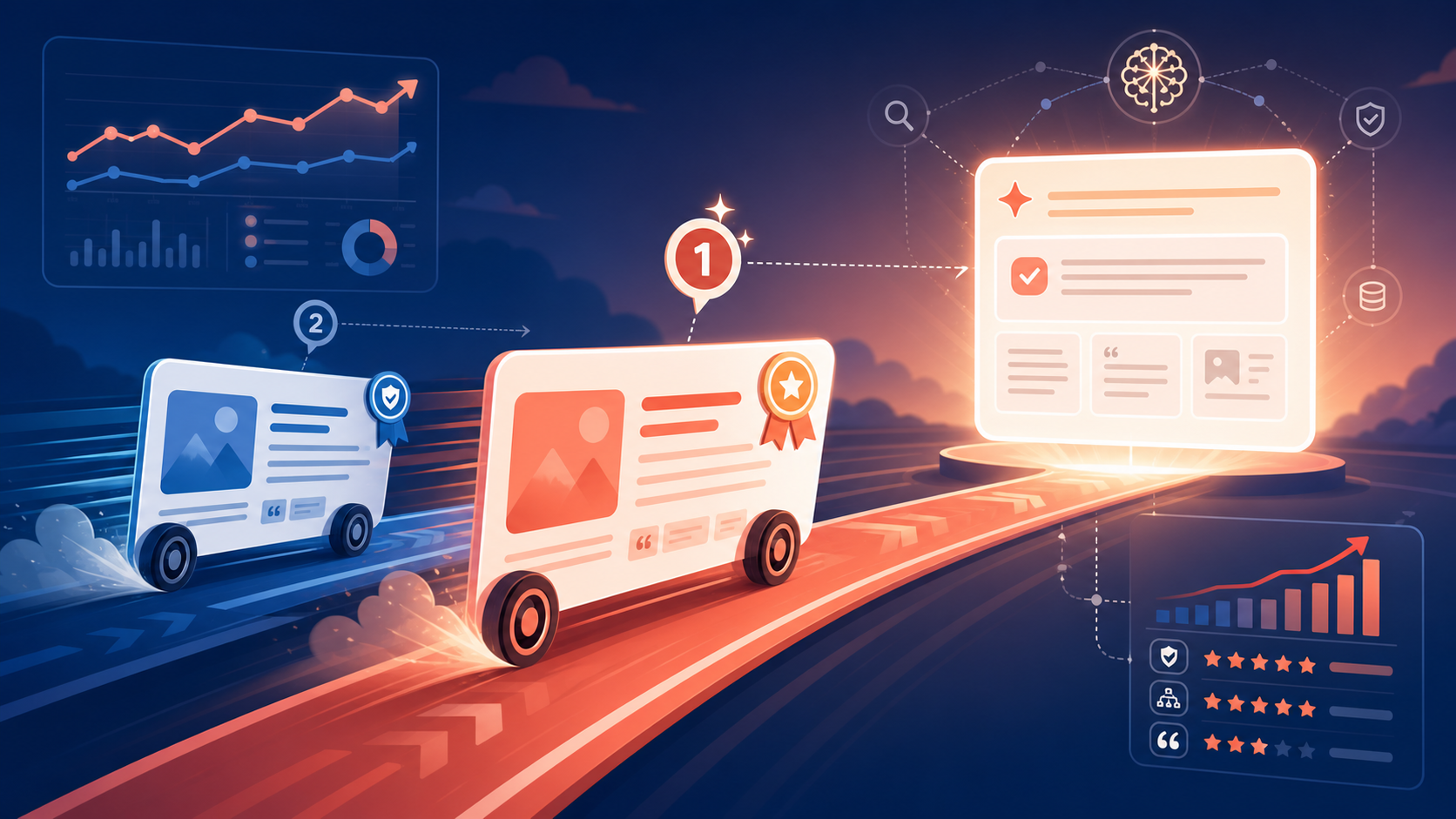
One of the most useful AEO questions in 2026 is no longer whether a page can be cited at all. It is whether that page can beat other retrieved sources and win the first citation in the answer. That is a more demanding problem, because it moves the conversation from simple visibility to competitive source selection.
This matters for SEO too. The pages most likely to win that first citation are often the pages that serve classic search best as well: clearer topical focus, more decisive information, fresher supporting facts, and stronger alignment with commercial questions. In practice, the same editorial upgrades that improve answer-engine visibility also tend to improve organic relevance and conversion quality.
Why this topic matters on June 8, 2026
The recent evidence is unusually actionable. A new competitive GEO paper tests what makes one source more likely to be cited first when two candidate pages compete. Google continues to say that AI features depend on standard Search eligibility and query fan-out retrieval, while Bing AI Performance already exposes citation and grounding signals. Put together, those sources make it possible to move from vague AEO advice to a much more concrete publishing method.
What the newest evidence says
1. Topical relevance is still the strongest signal
The May 25, 2026 paper 'What Gets Cited: Competitive GEO in AI Answer Engines' found that topical relevance was one of the biggest drivers of which source won the first citation when two candidates competed. That reinforces a simple rule: a page should not try to cover every adjacent topic at once. It should answer a specific commercial or informational need more directly than nearby alternatives.
2. Price information and recent timestamps can help
The same paper found that explicit price information and a recent timestamp improved first-citation likelihood more consistently than cosmetic formatting edits. For service businesses, that means surfacing concrete commercial facts a model can safely reuse: pricing logic, ranges, timing, update dates, qualification thresholds, and scope limits.
3. Formatting alone is weak if the page says nothing decisive
This is a useful corrective for content teams. Better headings, lists, and tables still matter, but mostly because they help expose meaningful information. If the page remains vague, derivative, or interchangeable, prettier formatting does not create source value on its own.
4. Google still points back to SEO fundamentals
Google Search Central says there are no extra technical requirements to appear as a supporting link in AI Overviews or AI Mode. A page needs to be indexed and eligible to show a snippet, and Google's systems may use query fan-out to retrieve supporting pages across related subtopics. That means AEO does not replace SEO fundamentals. It makes them stricter.
5. Bing already gives you useful citation instrumentation
Bing AI Performance now gives site owners a practical reporting layer for total citations, cited pages, grounding queries, and visibility trends. Even if Bing is not your biggest source of AI-driven traffic, those signals help you understand which pages are repeatedly reused and what language appears to trigger retrieval.
6. Citation presence is not enough
A separate April 2026 paper on citation absorption argues that being cited and influencing the answer are different outcomes. That distinction matters here. Winning the first citation is valuable, but the bigger goal is to win the parts of the answer that shape user understanding: definitions, comparisons, constraints, steps, and decision criteria.
What this means for an AEO strategy that also improves SEO
1. Build pages around a single decisive task
Choose one job for each important page: explain a service, compare options, answer a buying question, clarify pricing, document a method, or define when a solution is appropriate. Pages with a blurred purpose are easier for answer engines to ignore and harder for search engines to rank cleanly.
2. Surface reusable commercial facts
If price signals and freshness help, then your commercial pages should stop hiding the details buyers actually care about. Add ranges, timelines, exclusions, onboarding steps, prerequisites, and update dates where they are truthful and useful. Those details help human visitors and also give answer engines something concrete to cite.
3. Put critical evidence high enough to be extracted
The competitive GEO paper measured citation order inside model context; page layout on the open web was outside its scope. Even so, a practical inference follows: if your best evidence is buried late in the page, it is less likely to survive retrieval, snippet generation, and answer synthesis. Strong pages place decisive facts early, repeat them clearly, and support them with structure.
4. Connect source pages to one another
Pages rarely win durable citations in isolation. Link your service pages to methodology pages, comparisons, FAQs, case evidence, and local or sector-specific support content. This strengthens classic internal linking and helps answer engines encounter a more coherent source graph around your offer.
5. Measure first-citation share as well as total mentions
Add a simple editorial metric to your prompt portfolio: when your brand is cited, how often is your page the first cited source, and how often does the answer actually use your framing? Compare that with organic clicks, branded-search lift, assisted conversions, and lead quality. That is the data you need to decide what to expand next.
A practical 30-day implementation plan
- Week 1: identify five pages that should win high-intent buyer questions and rewrite each page around one decisive task.
- Week 2: add concrete price logic, timelines, update dates, scope boundaries, and qualification detail where they improve user understanding.
- Week 3: map Bing grounding queries and cited URLs against those pages, then tighten headings, comparisons, and supporting proof.
- Week 4: rerun your prompt set and log first-citation share, citation absorption, assisted conversions, and branded-search movement before choosing the next update cycle.
In June 2026, the pages that win AI visibility most reliably make the clearest, freshest, and most reusable case first.
For most companies, this is good news. The same work that improves first-citation probability also improves the quality of service pages, buying guides, comparisons, and core SEO assets. The right AEO strategy does not ask you to publish more generic content. It asks you to publish pages that are easier to retrieve, easier to trust, and harder to replace.
Sources and further reading
- arXiv: What Gets Cited: Competitive GEO in AI Answer Engines
- Google Search Central: AI features and your website
- Google Blog: New ways to find your favorite sources and original content in AI Search
- Bing Webmaster Blog: Introducing AI Performance in Bing Webmaster Tools Public Preview
- Bing Search Blog: Elevating the Role of Grounding on the AI Web
- arXiv: From Citation Selection to Citation Absorption
- arXiv: Synthetic Sources?: Auditing Generative Search Engine Citations for Evidence of AI-Generated Sources